
Stems
A poorly matched stem changes every handling input a rider makes, introducing flex, misalignment, or an uncomfortable position that no amount of bar tape will fix. ELITA ONE Carbon Stems solve that problem with precision-machined carbon fiber construction across seven models spanning multiple lengths and angles, giving performance cyclists a stiff, lightweight connection between fork and cockpit. Browse the full range now at the official store and order at the best price for your road, gravel, or MTB build.


ELITA ONE Carbon Stems for Road, Gravel and Mountain Bikes
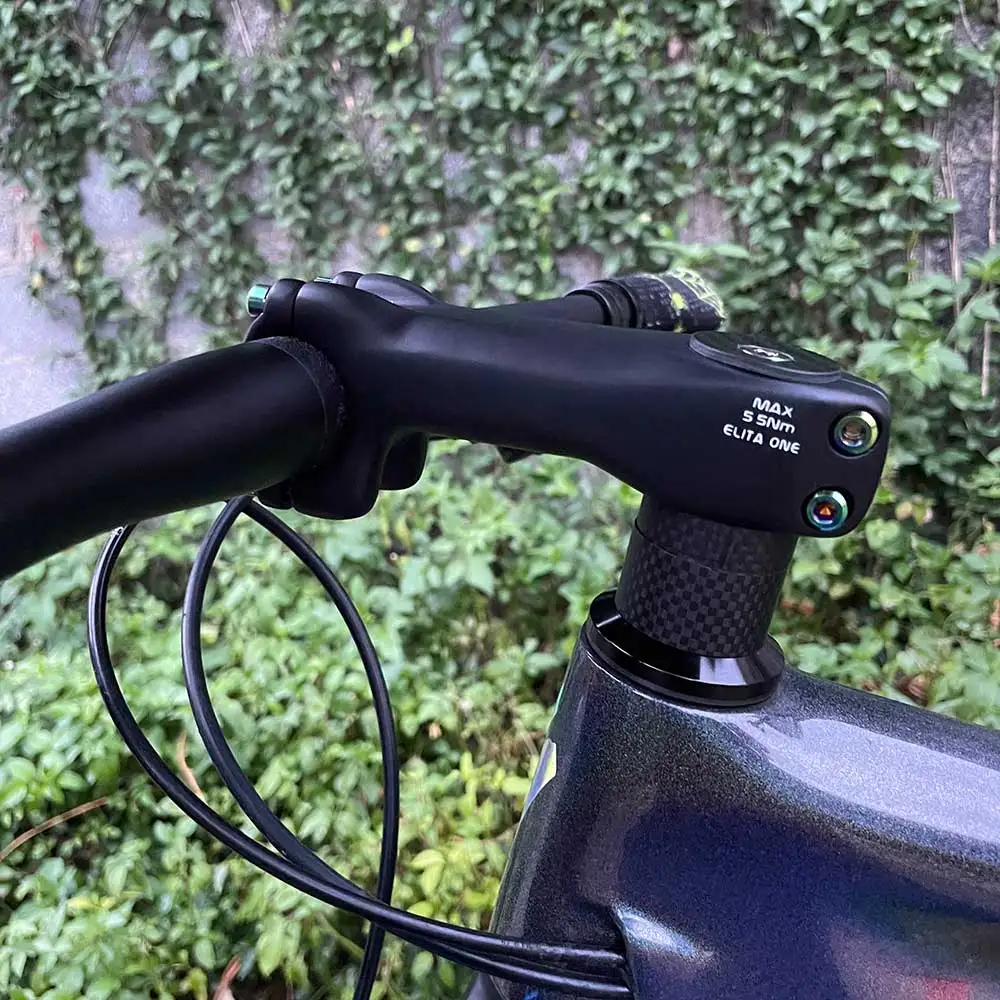
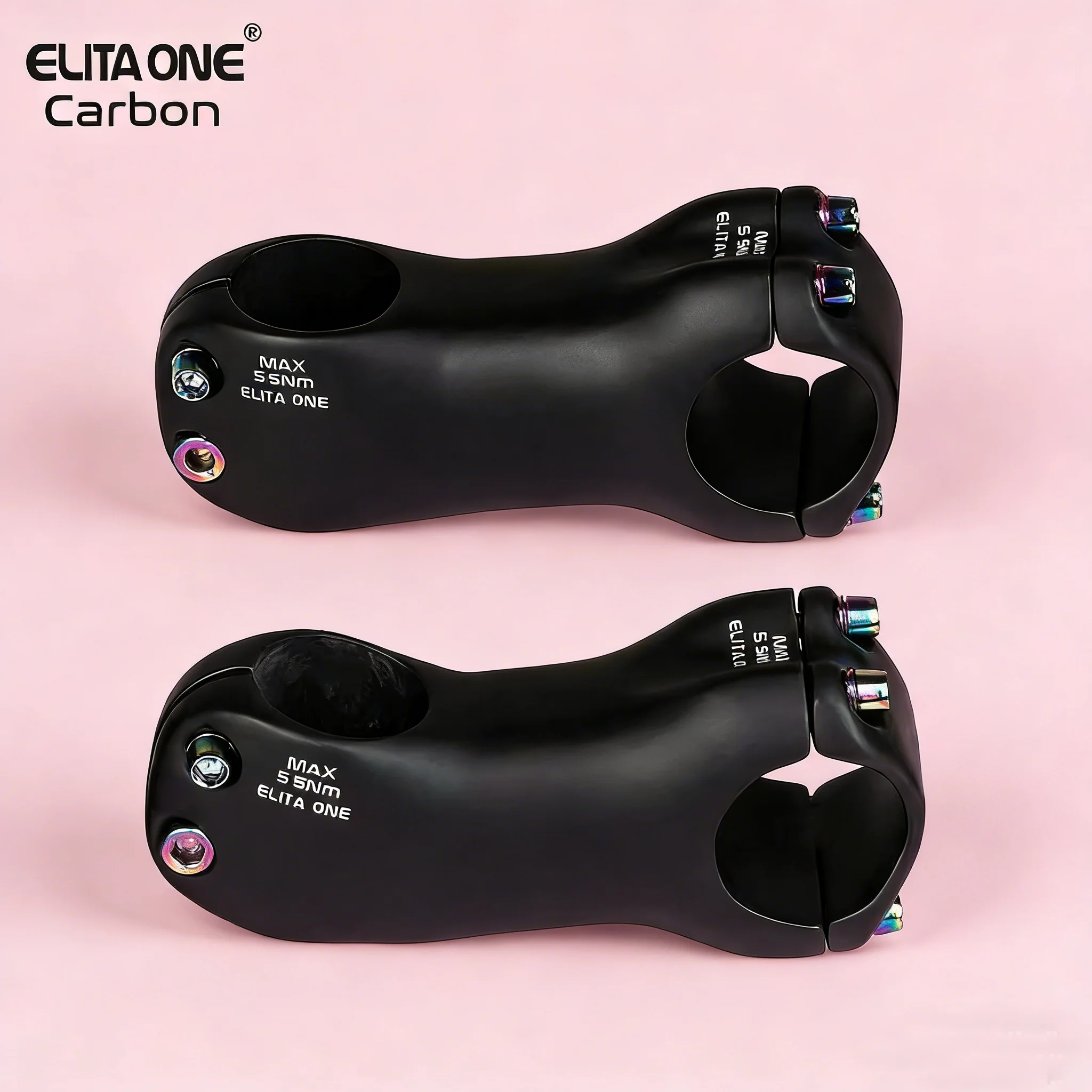
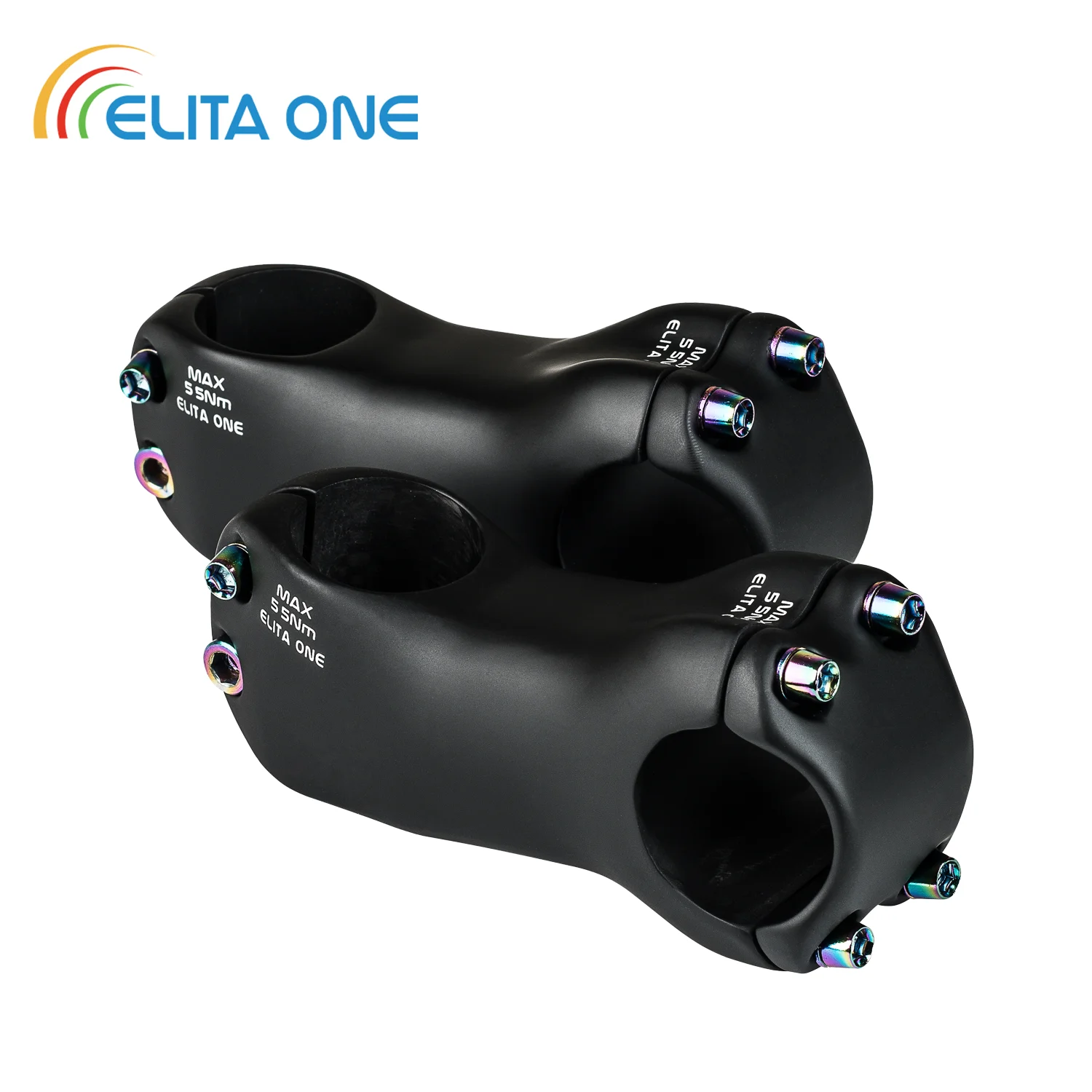
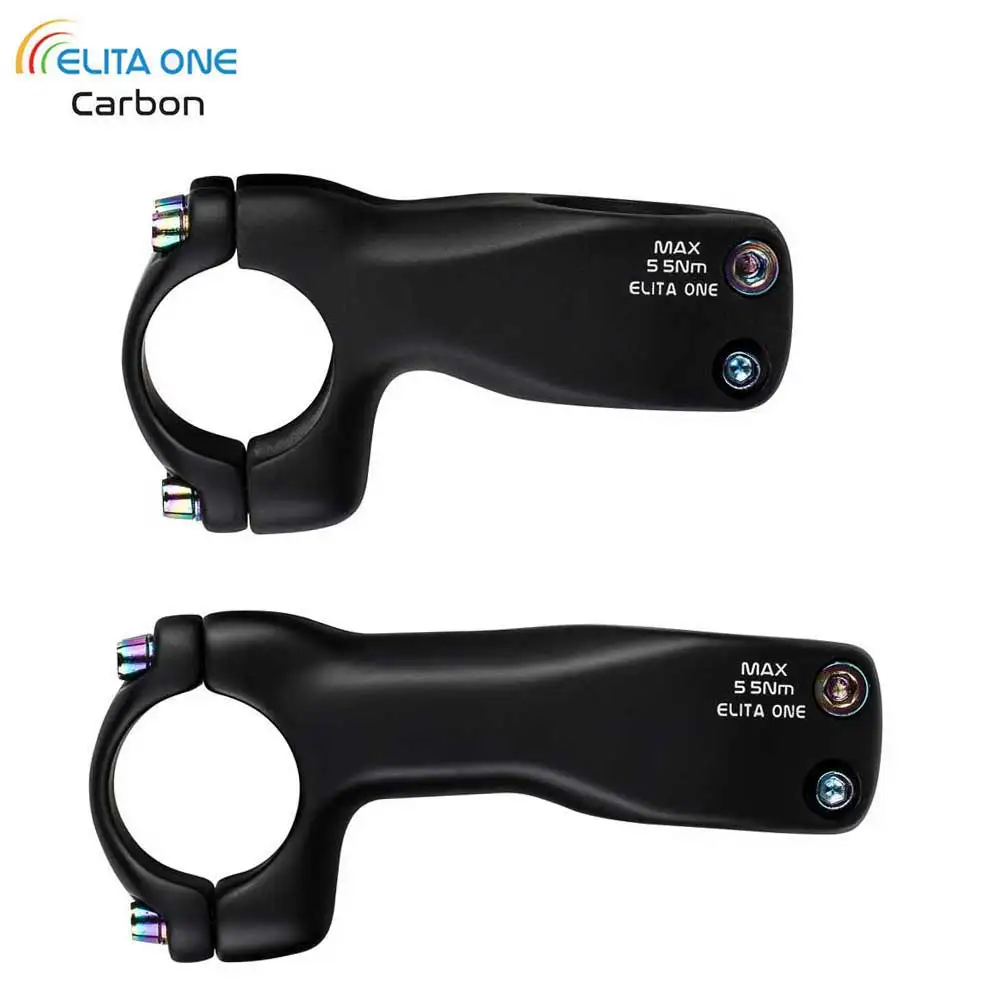
ELITA ONE Carbon Stems form a seven-model lineup that addresses the full spectrum of road racing, gravel, and trail riding geometries with a consistent commitment to low mass and high rigidity. Each stem is produced from a unidirectional carbon fiber shell bonded around a precisely machined aluminium insert at the steerer clamp, combining the weight advantage of carbon with the dimensional stability metal inserts provide under compression. Lengths in the range run from 60 mm to 130 mm in 10 mm increments, covering both aggressive short-reach race setups and more relaxed endurance positions without requiring custom solutions. Rise angles of -6, 0, and +6 degrees give riders the ability to fine-tune stack height without adding spacers that compromise steerer tube stiffness and aesthetics. All models use a four-bolt faceplate with 31.8 mm bar clamp and a 28.6 mm or 31.8 mm steerer clamp depending on the specific model, matching the most widely used fork and handlebar standards in contemporary cycling. Cyclists building or upgrading a performance-focused bike can order online and find the exact length and angle combination their position demands. Stiff, lightweight stems from a brand that engineers for measurable outcomes rather than marketing claims represent a practical upgrade that riders feel immediately on the road or trail.
Engineering and Materials Behind a Stiff Lightweight Stem
The carbon fiber shell on each stem uses a multi-directional layup with plies oriented to resist the bending loads that occur during hard sprinting and the torsional loads introduced when pulling on the bar through a corner. Stiffness in a stem is not a single number — it varies depending on load direction, and a well-engineered layup accounts for all three primary load axes rather than optimising for one at the expense of the others. High-modulus carbon fibers carry more load per unit of cross-sectional area than standard-modulus alternatives, which allows designers to reduce ply count and wall thickness while maintaining or exceeding the stiffness of heavier conventional stems. The aluminium insert at the steerer clamp distributes bolt preload evenly around the steerer tube, preventing the point-loading that can occur when carbon clamps directly onto carbon without an intervening metal interface. Faceplate bolts thread into stainless steel inserts embedded in the body, eliminating the risk of thread stripping that can occur in bare carbon under repeated removal and re-torquing during fit adjustments. Finished weights in the range start at 98 g for the shortest road models, placing them among the lightest stems available without resorting to exotic materials that compromise durability. Every production unit is pressure-tested before leaving the facility to confirm structural integrity at load levels that exceed normal cycling demands.
Why Riders Choose ELITA ONE Over Competing Stem Brands
Many performance cyclists approach stem selection as an afterthought after choosing a frame, fork, and drivetrain, yet the stem is the single component most directly responsible for translating rider input into front wheel direction. Competing brands in the same price tier frequently use standard-modulus carbon with thick walls to guarantee safety margins, which results in stems that weigh 140-180 g and flex perceptibly under sprint loads — exactly the conditions where precision matters most. The seven-model range from this trusted brand removes the need to settle for an available length rather than the correct length, because fit precision at the cockpit directly affects power transfer efficiency and long-ride comfort. Documented manufacturing tolerances ensure that a 90 mm stem measures 90 mm from steerer centerline to bar clamp centerline, a standard that several competitors do not publicly confirm. Surface finish consistency across production batches means that riders replacing a worn stem receive a visually and dimensionally identical part without needing to re-photograph or re-measure their setup. Weight savings at the cockpit sit in a mechanically sensitive location where lighter mass reduces the rotational inertia of the steering assembly, producing handling that feels more responsive during direction changes at speed. Selecting a stem based on fit, stiffness data, and verified tolerances rather than brand recognition alone is how experienced builders make decisions that improve performance rather than simply change appearance.
How to Select the Right Carbon Stem for Your Position
Begin with a professional or self-administered bike fit before ordering, because installing a stem that places the bar 10-15 mm closer or farther than optimal will create discomfort that accumulates over multi-hour rides into genuine pain and reduced power output. Use the current stem length as a starting point if the existing fit feels close but not perfect — moving one increment shorter or longer (10 mm) produces a noticeable shift in reach without requiring saddle adjustment. Rise angle selection depends on the difference between your saddle height and desired bar height: a negative rise lowers the bar for aerodynamic positions, while a positive rise suits endurance riders or those transitioning from flat-bar bikes who need gradual adaptation. Torque the steerer clamp bolts in a cross pattern to the manufacturer-specified value, typically 5 Nm, and always verify that the stem does not rotate on the steerer under a 10 kg static downward load before riding. The faceplate bolts require equal torque on all four bolts to avoid lateral bar movement — tighten in a star pattern and use a calibrated torque wrench rather than feel alone. Inspect the stem body and faceplate contact surfaces for finish changes or micro-cracking annually or after any crash that loaded the front end of the bike. Visit the official ELITA ONE store to compare the full seven-model range with detailed specifications, and place your order at the best price with full manufacturer support included.