
Seatposts
Every watt a rider produces travels through the seatpost before reaching the frame, making stiffness, precise height adjustment, and low mass three properties that directly affect performance on road, gravel, and mountain terrain. ELITA ONE Carbon Seatposts deliver all three across a six-model lineup built from high-modulus carbon fiber with setback and zero-offset options for accurate saddle positioning on any bike geometry. Find your ideal model and order online now at the best price from the official store.
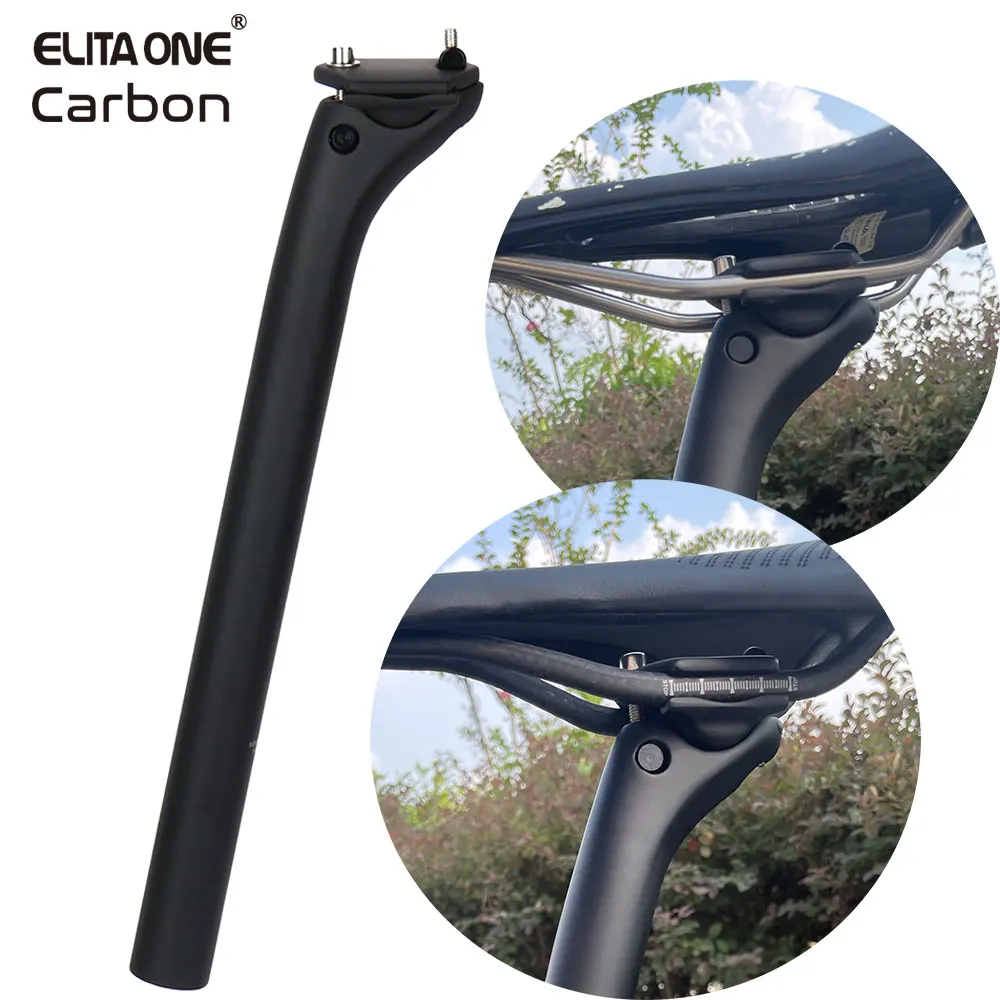

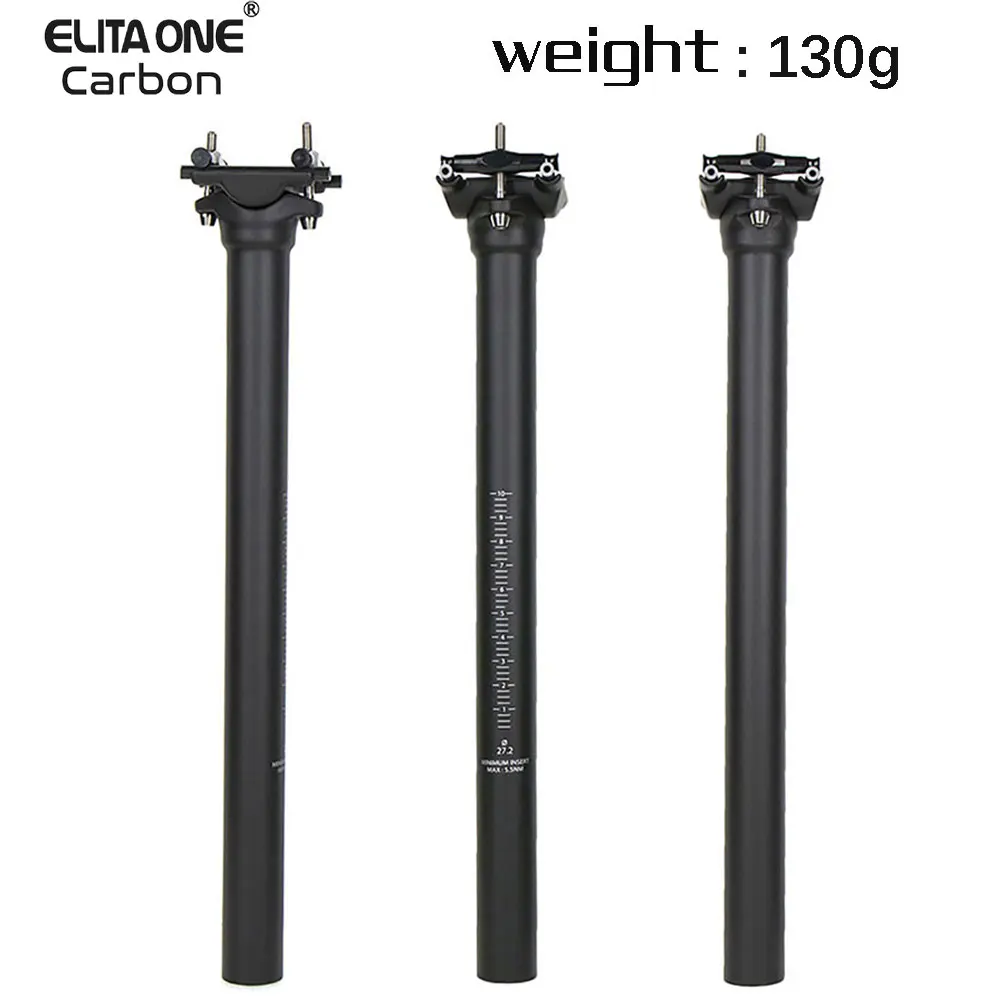
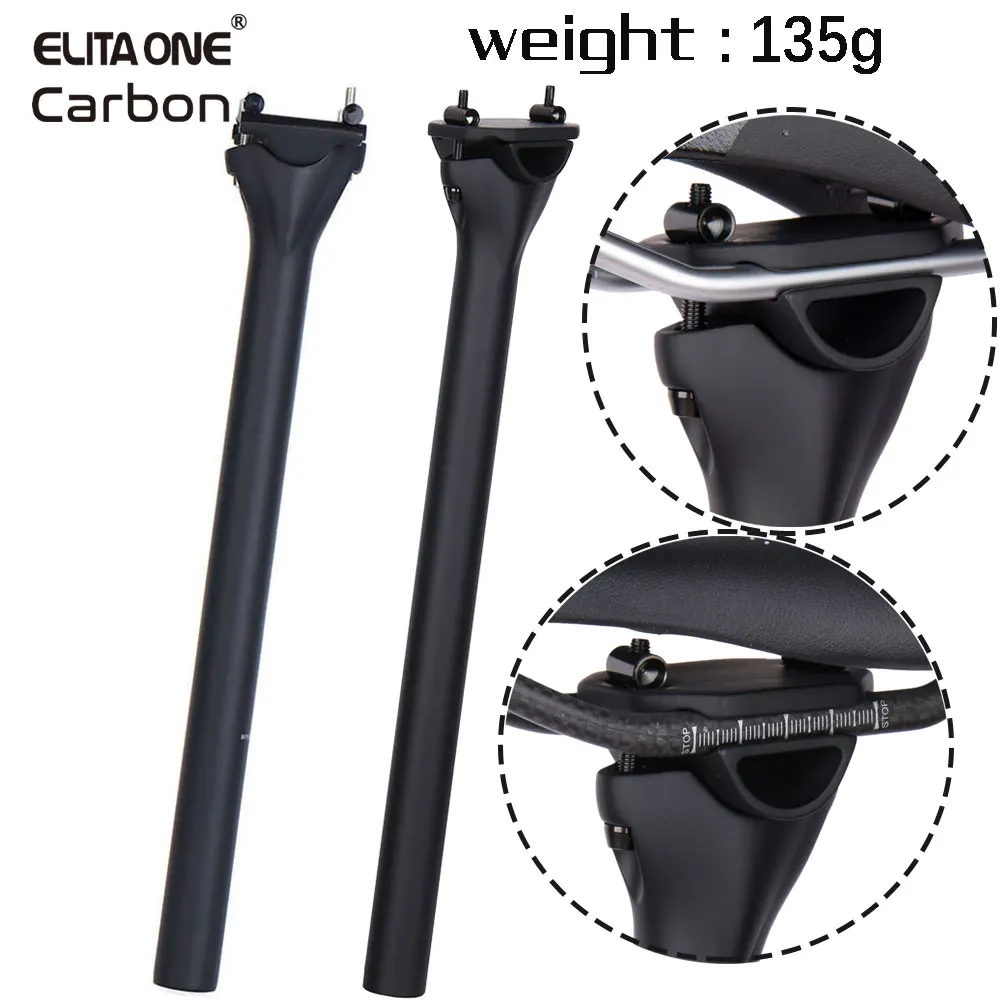
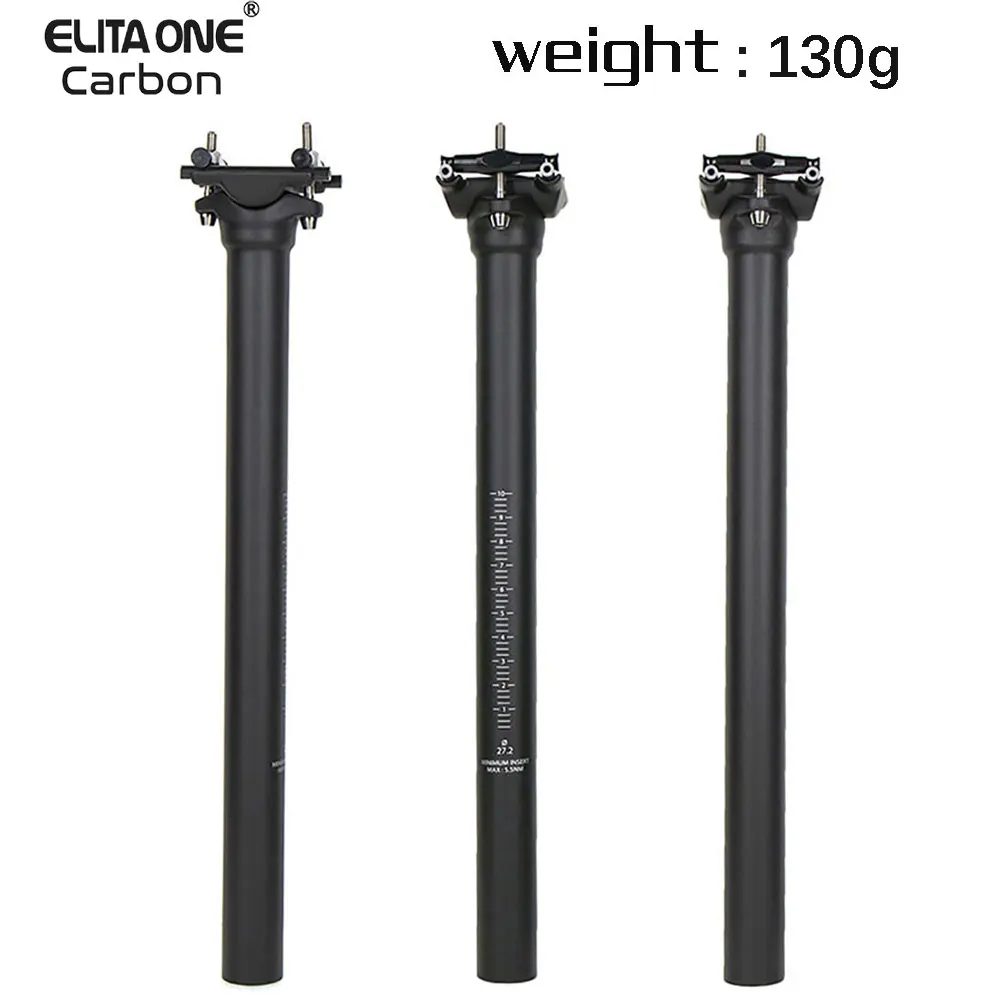

ELITA ONE Carbon Seatposts for Road, Gravel and MTB
ELITA ONE Carbon Seatposts offer performance cyclists a six-model range covering the most widely used diameter and setback combinations for road, gravel, and cross-country mountain biking in a single focused lineup. Available diameters include 27.2 mm, 30.9 mm, and 31.6 mm — the three standards that cover the vast majority of contemporary aluminium and carbon frames — so riders can source the correct fit without adapters that add weight and reduce stiffness. Setback options of 0 mm and 20 mm within the range allow precise saddle fore-aft positioning to match rider anatomy and frame geometry without relying on saddle clamp movement that could compromise rail clamping force. Length options extend from 350 mm to 400 mm, providing adequate insertion depth for tall riders on compact frames while keeping exposed post length within the safe minimum insertion mark for lighter cyclists. The ultralight stiff ride characteristic of high-modulus carbon fiber construction reduces seatpost mass to figures between 145 g and 195 g depending on diameter and length, delivering savings of 80-120 g compared to mid-range aluminium posts of equivalent dimensions. Every model ships with a two-bolt saddle clamp head that accommodates both round and oval carbon rails without requiring separate hardware, simplifying installation across different saddle specifications. Cyclists who want to order online from a brand that documents every specification can shop the complete range at the official store and confirm compatibility before purchase.
High-Modulus Carbon Construction and Ultralight Stiff Ride Engineering
High-modulus carbon fiber forms the tubular body of each seatpost using a mandrel-wound construction method that produces consistent wall thickness and eliminates the voids that hand-laid tubes can contain, directly affecting both stiffness uniformity and fatigue life. Wall thickness is graduated along the post length — thicker at the head where bending moments are highest, progressively thinner toward the insertion zone where the surrounding seat tube provides structural support — resulting in a stiffness profile matched to the actual load distribution rather than a uniform cross-section that wastes material at low-stress locations. The saddle clamp head on each model is machined from 7075-series aluminium alloy, chosen because its yield strength of approximately 500 MPa resists deformation under the clamping preload required to prevent saddle rotation without adding the mass that titanium or carbon head alternatives would demand at this component scale. Dual-bolt clamp systems distribute saddle rail clamping force across two contact points rather than one, reducing peak stress on the rail at each point by approximately 40 percent compared to single-bolt designs — a meaningful advantage for carbon rail saddles where point-loading is the primary failure mode. Internal bores are finished to tight tolerances so that the seat tube insertion fit is snug without requiring force, preventing the micro-movement that loose-fitting posts develop over time and that manifests as a creaking sound during seated pedalling. A matte finish on the carbon tube body allows for precise pencil marking of the minimum insertion line and seatpost height reference without the marks migrating on a slippery gloss surface. These construction details explain why the ultralight stiff ride this brand delivers is the result of deliberate engineering choices rather than a marketing claim attached to any tube made from carbon fiber.
Why ELITA ONE Carbon Seatposts Outperform Aluminium and Entry-Level Carbon Alternatives
Aluminium seatposts in the 27.2-31.6 mm diameter range typically weigh 230-310 g, placing them 85-165 g heavier than the equivalent carbon models — a difference that riders notice on climbs where every gram carried vertically costs measurable energy over a long ascent. Beyond weight, aluminium tubes transmit high-frequency vibration from road surfaces directly to the pelvis because the material has essentially no internal damping capacity, whereas carbon fiber composite structures absorb a portion of that vibration energy within the matrix before it reaches the rider. Entry-level carbon seatposts using standard-modulus fiber achieve some of the weight reduction but produce a post that deflects measurably under hard seated sprinting, reducing the efficiency of power transfer from rider to drivetrain in exactly the conditions where efficiency matters most. The brand selects high-modulus fiber for all models in this range specifically because the stiffness advantage over standard-modulus fiber is approximately 30-40 percent at equal wall thickness — stiffness that riders who sprint seated or climb out of the saddle in short bursts will detect through improved responsiveness. Corrosion resistance is a practical advantage over aluminium that matters to cyclists who ride in wet climates or store bikes in humid conditions: carbon fiber does not oxidise, and the sealed exterior finish prevents moisture ingress to the tube interior where aluminium would begin pitting. A trusted brand that publishes diameter tolerances to 0.1 mm precision enables builders to confirm insertion fit before installation, avoiding the seat-tube reaming or shim workarounds that imprecisely manufactured posts require. Choosing a carbon seatpost based on modulus specification and published tolerances rather than price alone is how experienced builders avoid expensive corrections after assembly.
How to Select and Install Your Carbon Seatpost Correctly
Measure the seat tube internal diameter with a dedicated bore gauge rather than relying on the frame manufacturer’s nominal size, because manufacturing tolerances mean that a frame labelled 31.6 mm may measure anywhere from 31.5 to 31.8 mm — a difference that determines whether a post fits correctly, loosely, or requires light lapping. Match the setback option to your current saddle position: if your saddle is near the rear limit of its clamp range on your current post, select the 20 mm setback version to re-centre the clamp and restore full fore-aft adjustment range without compromising clamping security. Apply carbon assembly paste to the exterior of the seatpost at the seat tube contact zone before insertion, then tighten the seat collar to the manufacturer-specified torque — typically 4-6 Nm for carbon posts — rather than applying the higher torque values appropriate for aluminium posts, which can crush carbon walls. Mark the minimum insertion line with a pencil before riding and verify that the mark remains inside the seat tube after every height adjustment, because riding below the safe minimum insertion depth concentrates bending stress at the tube exit point and can initiate cracking in both the post and the frame. Height adjustment on carbon posts requires loosening the collar, repositioning, and re-torquing correctly each time — carbon paste prevents the micro-movement during re-tightening that aluminium posts resist through friction alone. Inspect the post body at the seat tube exit point every six months for surface finish changes, paint transfer from the collar, or audible creaking that indicates inadequate clamping force or incorrect assembly. Order the correct model from the complete ELITA ONE Carbon Seatposts range at the official store, where diameter, setback, and length specifications are published in full so you can confirm the right choice before you buy at the best price.