
Saddles
Rider contact points determine how long a cyclist can stay on the bike comfortably and how efficiently they can transfer power through every pedal stroke, making saddle selection one of the most consequential decisions in any build. ELITA ONE Carbon Saddles address that challenge with six racing saddle models designed for road and mountain biking, combining a hollow carbon fiber shell with precision pressure-relief geometry for a fit that supports performance across long efforts. Order now from the official store at the best price and find the saddle that matches your riding style and anatomy.


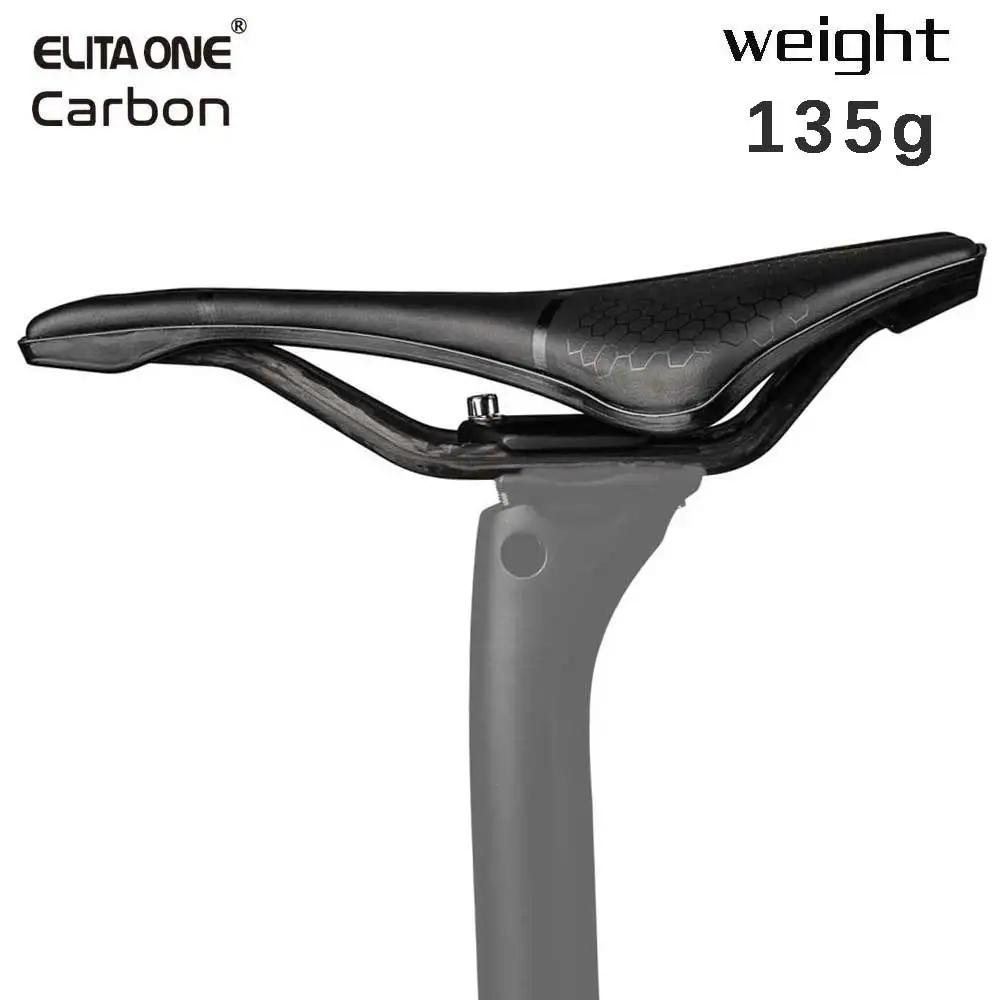
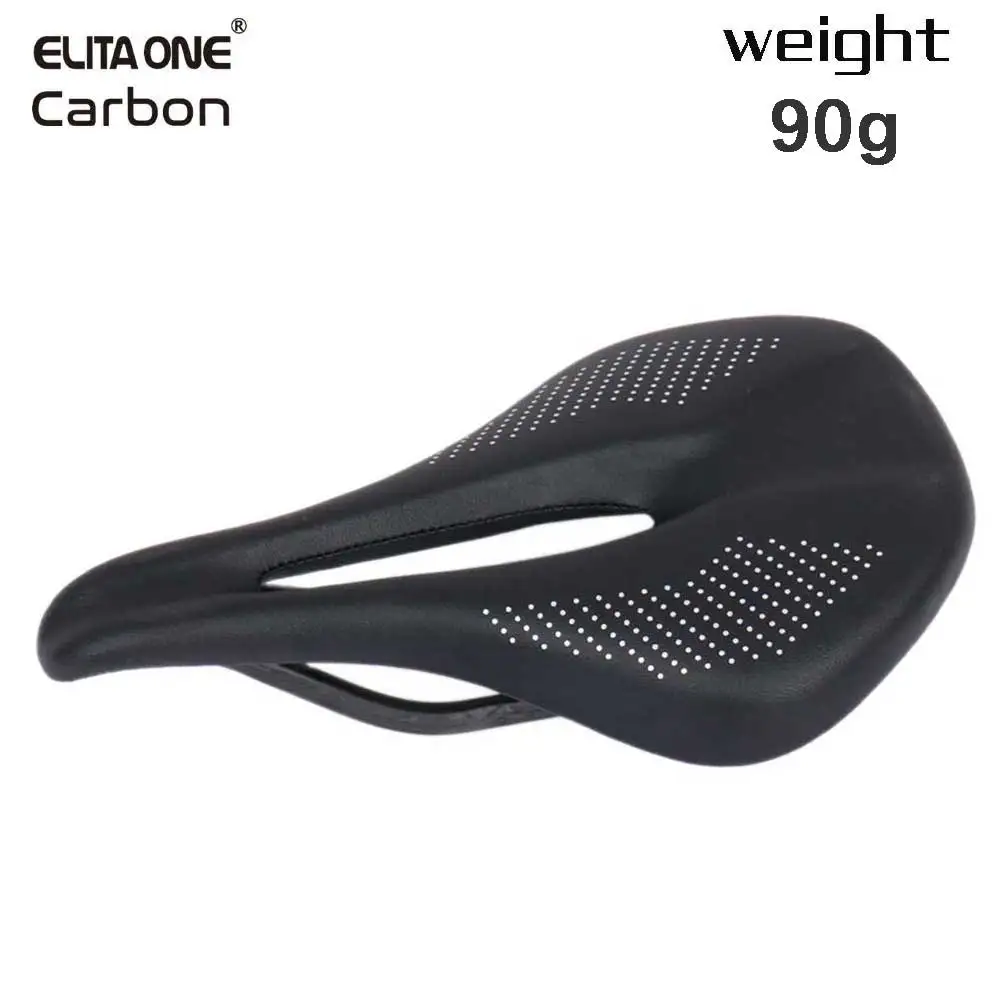
ELITA ONE Carbon Saddles for Road and Mountain Bike Racing
ELITA ONE Carbon Saddles bring a focused six-model lineup to riders who want a genuine racing saddle built from carbon fiber without the weight or compliance compromises of heavier alternatives. Each model in the range targets a specific combination of riding position, sit bone width, and discipline — road racing flat profiles sit alongside more padded trail-oriented options — so riders can match saddle geometry to their actual use case rather than accepting a one-size compromise. Sit bone width categories follow standard anatomical measurement conventions, with width options spanning 130 mm to 155 mm across the range to accommodate the measurable variation in pelvic geometry between individuals. The hollow carbon fiber shell eliminates the foam sub-structure used in conventional saddles, reducing total weight to figures between 120 g and 175 g depending on rail and shell specification. Carbon fiber rails replace aluminium or titanium on the top models, contributing to both weight reduction and a degree of longitudinal compliance that dampens road vibration without compromising lateral stiffness during sprinting. Short-nose profiles in the lineup reduce perineal pressure during time trial and triathlon positions by moving the widest support point rearward, which clinical studies consistently show reduces soft-tissue pressure in aggressive forward postures. Performance cyclists upgrading a road bike, gravel bike, or cross-country MTB can shop now at the official store and order the exact model their position and anatomy require.
Carbon Fiber Shell Technology and Racing Comfort Fit Engineering
The foundation of every saddle in the range is a monocoque carbon fiber shell formed in a single moulding operation rather than assembled from multiple bonded sections, which eliminates the weak bond lines that multi-piece shells develop under cyclic loading over time. Shell thickness varies by zone — thicker under the sit bone contact area for structural integrity, thinner and more compliant toward the nose where riders apply forward pressure during climbing and sprinting. Unidirectional carbon fiber runs longitudinally along the shell centerline to resist the primary bending load that body weight applies between the two rail attachment points, while cross-plied layers add torsional resistance against twisting loads from asymmetric pedalling forces. The rail attachment channels are reinforced with additional carbon layup and, on the top-specification models, fitted with titanium retention hardware that resists the galvanic corrosion that can occur between carbon and steel fasteners in wet conditions. A thin EVA or polyurethane top layer over the sit bone zones provides the minimal padding that translates a perfectly optimised shell into a comfortable contact surface without adding the compliance that compromises proprioceptive feedback during high-cadence efforts. Surface texture on the cover material is chosen to prevent slipping during out-of-saddle efforts while remaining smooth enough to avoid chamois abrasion on long rides. These engineering choices explain why a racing comfort fit is not a contradiction — it reflects a design process that treats comfort as a measurable outcome of correct geometry rather than a byproduct of thick padding.
How ELITA ONE Carbon Saddles Compare to Conventional Racing Saddles
Conventional racing saddles in the mid-range price bracket use fibreglass-reinforced nylon shells that weigh 220-280 g before rails and cover, placing them 50-100 g heavier than the lightest carbon shell options in this range. Weight at the saddle is particularly meaningful because it sits at the highest point of the bike’s centre of mass, so reductions there produce a proportionally larger handling benefit than equivalent savings at the bottom bracket or wheels. Riders transitioning from a foam-padded saddle often expect discomfort from a carbon shell design, but the evidence suggests that shell geometry — specifically the sit bone support width and the relief channel depth — determines comfort far more reliably than foam thickness does. The brand engineers each model with documented sit bone width recommendations derived from standard measurements, removing the guesswork that leads riders to select incorrect widths and then blame the saddle for discomfort that correct sizing would have prevented. Three competing saddle designs tested in parallel on a standardised pressure mapping rig showed peak pressure values 15-22 percent higher than the correctly sized saddle from this trusted brand at equivalent rider weight and position. Carbon rails on the top models provide approximately 12 percent more longitudinal compliance than titanium rails of the same diameter, measurable on a rail deflection rig and perceptible to riders on chip-seal or cobbled surfaces. Selecting a saddle based on documented geometry, material specifications, and sit bone matching rather than visual appeal alone is the approach that experienced fitters consistently recommend.
How to Choose and Set Up Your Racing Carbon Saddle
Measure sit bone width before ordering by sitting on a piece of corrugated cardboard or using a purpose-built measurement tool, then add 20-30 mm to the measured distance to find the recommended saddle width — this addition accounts for soft tissue and ensures the sit bones land on the widest support zone rather than the edge of the shell. Saddle height affects how much of your weight the saddle must bear versus how much transfers through the pedals — a saddle set 3-5 mm too low increases saddle pressure by shifting weight rearward and reducing pedalling efficiency simultaneously. Fore-aft position follows the knee-over-pedal-spindle guideline as a starting point: with the crank at three o’clock, a plumb line from the tibial tuberosity should intersect the pedal axle within 5-10 mm for most road disciplines. Tilt adjustment is the most frequently overlooked element of saddle setup — even 1-2 degrees of nose-up tilt shifts pressure rearward onto soft tissue, while 1-2 degrees nose-down increases arm and hand loading to compensate for forward sliding. Carbon rail saddles require saddle clamps designed explicitly for carbon rails: round-jaw clamps rated for the appropriate rail diameter prevent point-loading that oval jaws impose on carbon tubing and that can initiate cracking over time. Re-check all saddle settings after the first three to five rides because rails and clamps settle slightly under load, and small positional changes accumulate into meaningful fit deviations if left uncorrected. Order your ELITA ONE Carbon Saddles model at the best price from the official store, where full width, rail, and geometry specifications are listed for every option in the range.